There comes a moment in nearly every traveler’s life when they realize they have been moving too fast.
When the thrill of “seeing it all” begins to feel hollow.
When they return home from a whirlwind itinerary and can barely remember what they saw—only that they were exhausted, overstimulated, and racing to keep up with a schedule they created for themselves.
That is the reality of checklist tourism. For years, it dominated how people traveled.
What Checklist Tourism Really Is
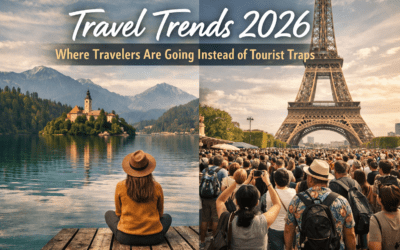
Checklist tourism is travel built around proof instead of presence.
It is the urge to stand in front of the Eiffel Tower, the Colosseum, or the Grand Canyon simply because those moments look impressive on paper—or on Instagram.
It is collecting passport stamps like trophies.
It is snapping a quick photo at an iconic viewpoint, then rushing off to the next destination before you have even had time to absorb what is around you.
It is travel that values momentum over meaning.
Motion over memory.
And for a long time, that was considered normal.
People hopped between cities in three-day bursts.
They sprinted through museums without reading a single plaque.
They followed the same “must-see” routes as everyone else, even if those places did not truly move them.
It was exciting, yes.
But rarely grounding.
Rarely nourishing.
Rarely transformative.
How Revenge Travel Accelerated Checklist Tourism
When borders reopened after the pandemic, something powerful happened.
People burst out into the world desperate to reclaim the time they felt they had lost.
That urgency created the perfect storm for checklist tourism.
After years of waiting, travelers were no longer simply excited.
They were hungry.
They wanted to go everywhere, see everything, and maximize every moment.
Bucket lists grew longer.
Flights became more accessible.
And travel became less about connection and more about catching up.
But that pace is not sustainable.
And it did not take long for travelers to realize that rushing across continents does not fill the soul.
It exhausts it.
The Role Social Media Played in Checklist Tourism
We cannot talk about checklist tourism without acknowledging social media.
For more than a decade, travel slowly became performance-based.
A trip was not considered meaningful unless it was photogenic.
Photos became proof of presence.
If it was not posted, did it even happen?
Destination choices began revolving around what would look best online rather than what felt most aligned personally.
People were no longer choosing experiences for themselves.
They were choosing them for an audience.
That pressure created an entire generation of travelers who felt anxious if they did not hit every major attraction or follow the same itineraries as every influencer online.
FOMO began driving decisions more than desire.
And while the photos may have looked beautiful, the pace behind them left little room for anything deeper.
Travel became fast.
But it stopped feeling fulfilling.
Why Checklist Tourism Has Reached Its Breaking Point
Now, something has shifted.
Travelers are tired—not of travel itself, but of performing travel.
They are exhausted by itineraries that leave no space to breathe.
Overwhelmed by airports, crowds, and the pressure to make every moment “count.”
Millennials and Gen Z especially are rethinking what travel means and why they do it.
They are realizing that doing more does not equal feeling more.
Movement is not the same as meaning.
We are entering a new era—one where travelers crave connection, not chaos.
Nourishment, not noise.
A sense of deep personal resonance instead of a highlight reel.
Where Travelers Are Turning Instead
Rather than flocking to overcrowded hotspots and rushed itineraries, many travelers are now seeking quieter destinations that offer authenticity, stillness, and deeper cultural immersion.
They are choosing places that feel grounded rather than performative—destinations that invite them to slow down, breathe deeper, and experience travel more meaningfully.
If you are curious where travelers are heading instead, explore where travelers are actually going now—and why.
The New Traveler Wants Depth, Not Distance
The next generation of travel is no longer about how much ground you cover.
It is about how deeply you experience the places you choose.
Travelers increasingly want:
- slower mornings
- longer stays
- fewer destinations
- deeper immersion
- more spontaneity
- greater emotional connection
They want trips that leave room for wonder.
Room for stillness.
Room for moments that were never planned but become unforgettable.
Because often the best parts of travel happen when you stop trying to control every second of it.
To understand how this kind of travel begins with the stay itself, take a closer look at unique stays around the world.
Slow Travel Is Becoming the New Soul of the Journey
Slow travel is not about doing less.
It is about doing what matters.
It is waking up without an alarm and letting the day unfold naturally.
It is wandering a quiet street with no agenda.
Lingering over coffee longer than planned.
Choosing rest without guilt.
Allowing a destination to reveal itself slowly rather than consuming it all at once.
Slow travel gives a trip soul, which is why slow, soulful travel has become such a defining movement among modern travelers.
It transforms movement into presence.
And for many travelers, it creates the very feeling they were missing all along.
Values-Based Travel Is Replacing Status Travel
Travel is becoming less about appearances and more about alignment.
Modern travelers increasingly choose experiences that reflect their values.
They seek:
- family-owned stays over corporate chains
- local guides over mass tour companies
- cultural immersion over commercial attractions
- meaningful design over flashy luxury
- authenticity over status
These choices are not random.
They are intentional.
Travel is becoming a reflection of identity—of what we value, what we care about, and how we want to move through the world.
Why Checklist Tourism No Longer Serves Us
Checklist tourism teaches us to keep moving.
Meaningful travel reminds us to stay.
Checklist tourism celebrates what we can capture.
Meaningful travel celebrates what we can feel.
Checklist tourism gives us photos.
Meaningful travel gives us perspective.
The more travelers rushed through destinations, the more they realized they were not returning home transformed.
They were returning home tired.
And that fatigue sparked a broader shift toward travel that feels slower, deeper, and more human.
Why This Shift Is Exactly Why Atlas + Wild Was Built
This movement away from checklist tourism and toward curated, soulful, intentional travel is the foundation of Atlas + Wild.
Atlas + Wild was created for travelers who want:
- depth over drama
- wellness over whirlwind itineraries
- purpose over perfectly staged Instagram images
- character over hype
- stays with story, soul, and identity
- destinations that feel fresh, honest, and human
It exists for travelers who want to slow down, breathe deeper, and experience the world in a way that feels aligned with how they want to feel.
Because the future of travel is not about collecting more stamps.
It is about collecting stories.
And that future is only just beginning.