


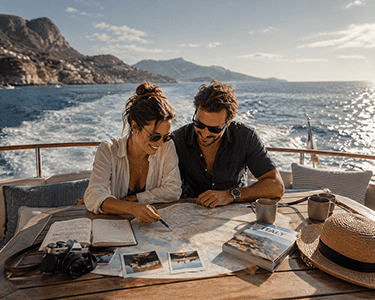
How to Design a Meaningful, Aligned Trip
Intentional travel planning is the process of designing a trip based on how you want to feel, the landscape you want to immerse yourself in, and the experiences that align with your current season of life. Instead of starting with flights or hotels, intentional travel begins with emotional clarity and ends with meaningful travel experiences that resonate long after you return home.
Most trips are planned backwards. We start with price. Or convenience. Or whatever destination is trending.
What do I need right now?
Not what looks impressive.
Not what photographs well.
Not what everyone else is doing.
But what will actually restore, challenge, inspire, or ground you?
Intentional travel planning asks something deeper: At its core, travel has always been about reflection and transformation, not just movement from one place to another. Before choosing where to go, it helps to understand intentional travel planning—a framework for designing trips based on how you want to feel, not just where you want to go.
Why Intentional Travel Planning Matters
Modern travel can be overstimulating. Too many tabs open. Too many options. Too many “top 10” lists.
Without intention, trips often lead to:
Decision fatigue
Packed itineraries
Surface-level experiences
Post-trip exhaustion
Intentional travel planning replaces volume with alignment.
It focuses on:
Emotional clarity
Landscape alignment
Unique places to stay
Immersive travel experiences
Sustainable pacing
This approach does not remove adventure. It removes chaos.
How to Travel Without Burnout
Travel burnout happens when a trip becomes a performance rather than a lived experience.
Many travelers unintentionally recreate the pace of their work life while on vacation. Early alarms. Tight schedules. Back-to-back reservations.
To travel without burnout, shift your structure.
Plan Fewer Transitions
Every airport, train station, or hotel check-in consumes energy. Choose fewer destinations and stay longer. This aligns with slow travel principles and reduces cognitive load.
Protect White Space
Leave unscheduled mornings. Protect evenings. Allow space for wandering. White space creates room for immersion.
Choose Boutique Accommodations With Atmosphere
Generic hotels require you to leave to feel something. Unique places to stay—like those featured in our curated collection of unique stays around the world—offer an experience that begins the moment you arrive. Architect-designed cabins. Eco-luxury retreats. Independent lodges. These environments contribute to restoration.
Design Around Energy, Not Efficiency
Plan high-energy activities early in the day. Reserve evenings for grounding rituals like sauna, reading, or long dinners. Intentional travel planning considers energy cycles. Burnout happens when pace overrides presence.
Travel for Nervous System Reset
Travel for nervous system reset prioritizes environments and experiences that calm overstimulation and restore equilibrium. The nervous system responds to environment.
Mountain air slows breath.
Ocean horizons widen perspective.
Desert silence reduces sensory input.
Forest immersion lowers cortisol.
Intentional travel planning uses landscape strategically.
Choose Regulating Landscapes
If you feel scattered, choose simplicity.
If you feel confined, choose openness.
If you feel exhausted, choose nature-driven stillness.
Immersive travel experiences rooted in natural landscapes offer measurable mental benefits. These are the kinds of moments that define experiential travel, where the environment becomes part of the experience itself.
Prioritize Quiet Luxury
Quiet luxury in travel supports nervous system reset. Design-forward cabins, minimal noise pollution, private stays, and expansive views encourage restoration.
This is not about indulgence. It is about alignment.
Build Recovery Into Your Trip
Alternate stimulation with stillness.
Hike in the morning. Sauna in the afternoon. Stargaze at night.
Intentional travel planning understands that recovery is part of the experience.
How to Choose Landscape First
Choosing landscape first is a core principle of intentional travel planning. It anchors the trip in environment before logistics.
Most travel decisions begin with city names. Intentional planning begins with landscape.
Ask yourself:
Do I want mountains, coast, desert, forest, or cultural city neighborhoods?
Do I want altitude or sea level?
Do I crave silence or subtle urban rhythm?
Landscape shapes pace.
Mountains create introspection.
Coastlines create expansion.
Deserts create stillness.
Forests create grounding.
Cities create stimulation and cultural immersion.
When landscape leads, everything else aligns.
Stay Types Should Match Landscape
A coastal hideaway should emphasize horizon views.
A forest retreat should center immersion.
A mountain lodge should maximize elevation and perspective.
Unique places to stay amplify the landscape. Landscape is not background. It is structure. From treehouses to glass cabins, exploring unique stays around the world helps bring these intentional trips to life.
Why Feeling-First Planning Works
Feeling-first planning begins with emotional intention and builds the trip outward from that foundation. This is the foundation of travel based on how you want to feel, where your emotional state guides every decision—from landscape to stay.
Emotion drives memory.
Travel based on how you want to feel creates resonance.
Start with questions like:
Do I want to feel restored?
Do I want to feel adventurous?
Do I want to feel grounded?
Do I want to feel inspired?
Once defined, align experiences accordingly.
Restoration aligns with slow travel and eco-luxury retreats.
Adventure aligns with hiking, skiing, or wildlife viewing.
Inspiration aligns with architecture, design-forward cabins, and cultural neighborhoods.
Feeling-first planning eliminates mismatch.
You are less likely to book a high-energy city escape when what you needed was silence.
Intentional travel planning reduces regret because it increases clarity.
Designing a Meaningful Trip
A meaningful trip is one where the stay, the landscape, and the experiences belong together.
Designing a meaningful trip requires integration.
Clarify Emotional Intention
Write down how you want to feel.
Be specific. Calm is different from restored. Inspired is different from energized.
Select Landscape
Choose environment based on emotional alignment.
Curate Unique Places to Stay
Select boutique accommodations that enhance the landscape. Explore our curated collection of Destinations to discover stays designed for immersion, not just accommodation.
Independent lodges and architect-designed cabins often offer deeper immersion than chain properties.
Layer Immersive Travel Experiences
Experiences should support the intention.
For restoration:
Sauna rituals
Hot springs
Slow hiking
Stargazing
For adventure:
Backcountry skiing
Wildlife encounters
Coastal surfing
Desert exploration
For cultural immersion:
Local markets
Regional cooking
Neighborhood walking tours
Meaning emerges from cohesion.
Intentional Travel Planning vs Reactive Travel
Reactive travel responds to deals, trends, and social media.
Intentional travel planning responds to self-awareness. Reactive travel often leads to:
Overpacked schedules
Surface experiences
Post-trip fatigue
Intentional travel planning leads to:
Alignment
Depth
Restoration
Immersion
Meaning
It replaces FOMO with clarity.
Is Intentional Travel Expensive?
Intentional travel planning is not defined by budget. It is defined by thoughtfulness.
A small remote cabin may provide more meaning than a luxury hotel tower.
A boutique accommodation with landscape immersion may cost less than a high-profile resort.
Intentionality is not about spending more. It is about choosing differently.
The Future of Intentional Travel Planning
Travelers are increasingly seeking:
Immersive travel experiences
Boutique accommodations
Unique places to stay
Slow travel destinations
Landscape-driven design
Direct booking with independent hosts
Intentional travel planning reflects a broader shift in values. People want fewer trips that matter more. They want travel that restores rather than depletes. They want curated travel experiences aligned with who they are becoming. Intentional travel planning is not about control.
It is about awareness.
When you begin with feeling, choose landscape deliberately, select unique places to stay with care, and layer immersive travel experiences intentionally, travel becomes transformative. It stops being something you consume. It becomes something you experience. And when a trip truly aligns, it does not feel accidental.
When travel is designed with intention, it stops feeling random. It feels chosen.
For more inspiration and ideas, explore the travel blog where we break down destinations, stays, and experiences designed around intention.